
A name from a father
- November

TO PROTECT THE WORKER AND THOSE SHE SERVES, IDENTIFYING DETAILS HAVE BEEN WITHHELD. PHOTOS ARE ILLUSTRATIVE.
The nomads of Central Asia live like Abraham in many ways: pitching tents, herding animals, keeping track of extended family clans and memorizing genealogies. Another similarity between their culture and that of the Bible is their belief that words have power: a blessing or a curse, a congratulatory wish, or the meaning of a child’s name are all expected to change the real world. This belief leads to some strange baby names as a form of birth control! A boy’s name meaning, “Make it stop,” is given to a child the family hopes will be the last one. A girl’s name meaning, “May it be a boy next time,” is given to the third or fourth daughters of families hoping for a male heir. That name makes me shiver, wondering, “Will that woman hear ‘We wanted somebody else, not you’ every time she hears her name?” So I was glad that “Riza,” the local name I was given, has a positive meaning for believers: “grateful, content, or satisfied.” In fact, it frequently shows up in worship songs, like “Jesus my heart is riza in You!” or in the traditional ending of prayers: “we pray with riza-ness in the name of Jesus, amen.” Sometimes I would hear my name in a prayer and turn around, thinking they were praying about me! I didn’t realize my name could also be used in the birth-control way until I encountered a woman with a story about it.
We met in a village a two-hour bus ride from my house, over a lavish spread of deep-fried bread, horse sausage, and milk tea, where she had been invited by her friend in hopes that I would pray with her. When I told her my local name was Riza, she said, “Oh, I have a sister named Riza! My parents had five daughters. She was number four, and I was number five. My father wanted to tell God that he was ‘riza’—grateful, content, and satisfied—to have four daughters and really didn’t need any more!” “Oh wow. He still had you, after that,” I noticed. “Yes, he did,” she agreed. When we left the tea table, I felt the Spirit’s nudge: ask her more about her father. So I did. She picked up the story where she had left it off. “He really didn’t want a fifth daughter. When I was born, he was so upset that he refused to pick my mother and me up from the maternity hospital. He gave me to his parents, my grandparents, to raise, and then my parents never visited me, so until I was 8, I didn’t even know I had parents and four older sisters. Then they came to get me, but I always felt like I was living with strangers, and I had no right to ask them for anything because I didn’t belong to them.” I felt Jesus’ anguish rising up in me at how His Father had been misrepresented to her. It welled up in my eyes as tears. She noticed, and began to feel awkward that I was blinking back tears at a story she had told without emotion. “I was never angry about it,” she tried to explain. “I always assumed that that was the way life was supposed to be—that I wasn’t supposed to be loved—that my father was supposed to hold Riza on his lap but not me, or tell her that he loved her but not me.”
I reached out for help to the One dwelling inside of me as one of His walking temples on the earth. Lord, what do I do with this? I felt the inner response: Get her to pray for forgiveness for her father. I whispered back, Okay, help me get there! I said out loud, slowly, “You say that you don’t feel any anger at your father for the way he treated you, but he did sin against you, and when people sin against us, we have the authority to forgive them in Jesus’ name. And when we do that, it releases something powerful in the spiritual realm. So would you be willing to repeat after me a prayer to forgive your father?” She agreed, so I took a deep breath and began, “In Jesus’ name.” She repeated, “In Jesus’ name.” “I choose to forgive my father…” I continued. She repeated it. “…For sinning against You, God, by not agreeing with You that I am a good gift and that I needed to exist,” I finished my sentence. She tried to repeat it.
The mask broke. Her face crumpled, and she started sobbing like a baby in my arms, letting all the suppressed feelings up and out. I held her tightly, and when she could finally speak again, we finished the prayer, forgiving her father for every hurt she could think to add. Then I asked, “Jesus, what do you want to give her in exchange?” He brought to mind for her the lies that her father’s example had taught her about God. When she renounced the lies one by one and forgave her father for teaching them to her, Jesus helped her replace each one with the truth about His Father and His love for her. It was a beautiful process that I have had the privilege of witnessing Him do many times now. She left able to see herself holding Jesus’ hand and walking together into a new sunrise. But it wasn’t until I got home, sat on the pile of quilted green mats in the corner of my one-room apartment that I call my “prayer room,” and talked it all over with Jesus that I realized the poetry of what He had done. “Do you realize what I just did?”
Her earthly father named his daughter Riza to tell her that he didn’t want her. So I sent you, My daughter named Riza, to tell her that I do want her.” I was speechless. When I could put my awe into words, I was sputtering, “It was a non-believer who gave me that name, seven years ago! Nobody could ever have planned that except You!” It reminded me of Ephesians 2:10, which says we are God’s “handiwork” or “masterpiece”—in Greek, poema—and that He prepares both us and the good works He has for us. So is it any wonder that what He calls us and the opportunities He surprises us with rhyme? This is true for all of us, not just those of us working overseas. What names does your heavenly Father call you? What assignments does He have for you to do in that identity, as that poetic masterpiece? The nomads are right that a name from a Father has the power to reshape the world.
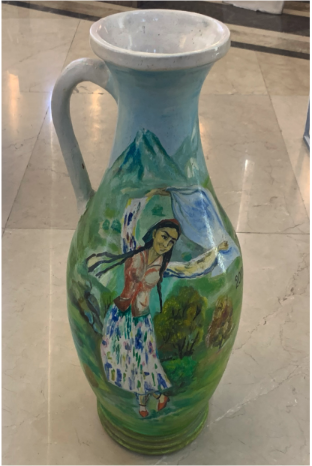
Elizabeth S. is a long-term worker in Central Asia
Messenger is a monthly newsletter and prayer guide
Sign up to receive the email or print versions below